
Oil drilling
I. Application overview
Alloys are widely used in the field of oil drilling, mainly due to their excellent mechanical properties, wear resistance, corrosion resistance and other properties. Here are some of the main applications of alloys in oil drilling:
(1) Drill bit manufacturing: Drill bits are key components in oil drilling, and cemented carbide is widely used to manufacture drill bits due to its high hardness and excellent wear resistance. Carbide drill bits can drill stably under various geological conditions, significantly improving drilling efficiency and drill bit life.
(2) Drill collar and drill pipe: Drill collar is an important component that connects the drill bit and drill pipe, and plays a role in transmitting power and withstanding rotational torque. Alloy drill collars are not only wear-resistant, but also have good bending resistance and fatigue resistance, which can effectively avoid problems such as drill collar deformation. Likewise, alloy drill pipes are widely used in oil drilling due to their high strength and wear resistance.
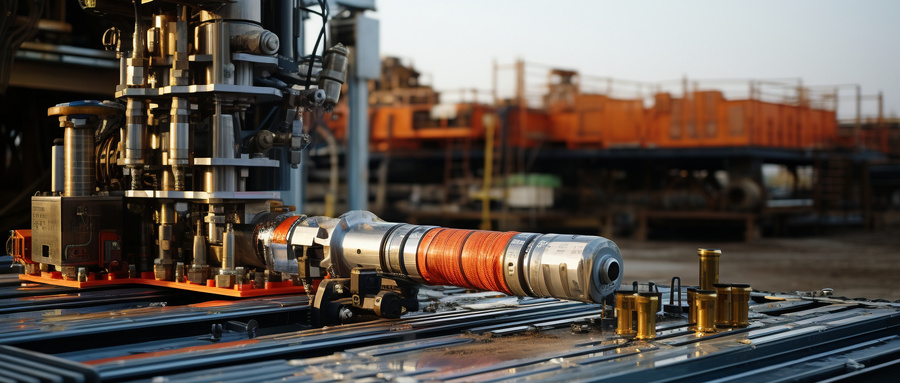
(Wear-resistant Alloy Drill Bits & Drill Rods)
(3) Casing and tubing: In oil drilling, casing is used to protect the well wall and prevent formation fluids from in-fluxing into the well, while tubing is used to transport oil from underground to the surface. Due to their good mechanical properties and corrosion resistance, alloy casing and tubing can work stably for a long time in high temperature, high pressure and corrosive environments.
Valves and Pipe Fittings: A variety of valves and pipe fittings are used during oil drilling to control fluid flow and prevent leaks. Alloy valves and pipe fittings can meet the stringent requirements of oil drilling due to their high strength, good sealing and corrosion resistance.
II. Detailed explanation of material requirements
Oil drilling is an engineering field that requires extremely high material performance and needs to cope with challenges such as extreme underground environments, high pressure, high temperature, and causticity.
(1) Corrosion resistance
During the oil drilling process, alloy materials need to withstand corrosion from underground oil, gas, water, and various salts and acidic substances. Therefore, excellent corrosion resistance is a basic requirement for alloy materials in the field of oil drilling. Alloys with high corrosion resistance can reduce equipment damage and repair frequency, improving drilling efficiency and safety.
(2), high strength and high toughness
In oil drilling operations, alloy materials need to withstand huge pressure and impact forces. This requires alloys with high strength and toughness to resist deformation and fracture during drilling. High-strength alloys ensure the structural stability of equipment, while high-toughness alloys absorb energy during impact, reducing the risk of fracture.
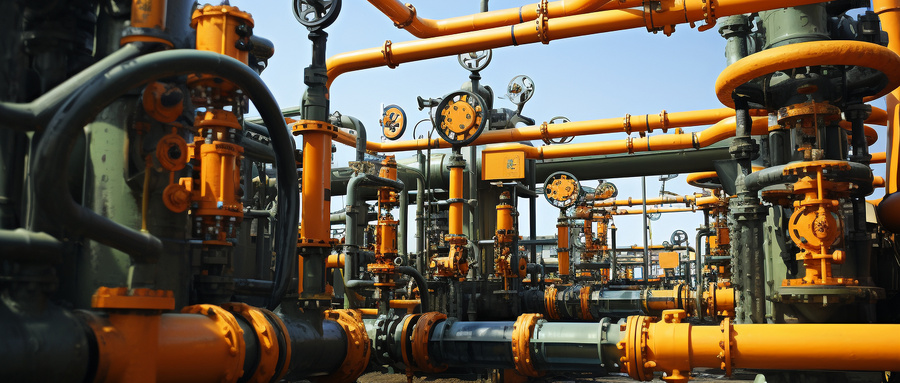
(Alloy Valves & Pipes to Control Fluid Flow & Prevent Leaks)
(3) Wear resistance
In the oil drilling process, alloy materials also need to have good wear resistance. Friction and wear during drilling operations can lead to reduced equipment performance or even damage. Therefore, alloy materials with strong wear resistance can extend the service life of equipment and reduce maintenance and replacement costs.
(4) High temperature resistance
Oil drilling operations often need to be carried out in high-temperature environments, which requires alloy materials to have good high-temperature resistance. In high-temperature environments, the mechanical properties and chemical stability of alloy materials may change, so it is necessary to select alloys that can maintain stable performance at high temperatures. Alloys with high temperature resistance can ensure the normal operation of equipment in high temperature environments and improve drilling efficiency.
(5) Good processing performance
Alloy materials used in oil drilling should also have good processing properties to facilitate manufacturing and maintenance. Good processing properties include ease of cutting, welding, forging, heat treatment, etc., which helps reduce production costs and improve production efficiency. At the same time, good processing performance also helps realize the manufacturing of complex structures and processing of precise dimensions to meet the diverse needs of oil drilling equipment.
III. Refinement of process requirements
(1) Material selection and matching: According to the specific engineering environment and needs of oil drilling, select alloy materials with appropriate properties. For example, in sulfur-containing oil and gas fields, alloys with excellent corrosion resistance, such as titanium alloys, need to be selected. At the same time, the compatibility of the alloy with other materials must be considered to ensure that all components work together during the drilling process.
(2) Processing process control: The processing processes of alloy materials, such as casting, forging, heat treatment, etc., have an important impact on their final properties. Therefore, the processing parameters need to be strictly controlled to ensure that the alloy materials have the required mechanical properties and corrosion resistance.
(3) Structural design optimization: The alloy structure is optimized for the specific working conditions of oil drilling equipment. For example, by adjusting the composition and micro-structure of the alloy, its tensile strength, toughness and wear resistance can be improved. At the same time, the overall structure of the equipment must be considered to ensure uniform stress on each component and reduce the risk of stress concentration and fatigue fracture.
(4) Surface treatment and protection: During the oil drilling process, alloy materials may be damaged by wear, corrosion, etc. In order to extend the service life and improve performance of equipment, appropriate surface preparation measures are required. For example, the wear resistance and corrosion resistance of alloys can be improved through technical means such as coating and plating. These surface treatment measures can effectively protect alloy materials from the external environment and ensure long-term stable operation of the equipment.
(5) Quality control and testing: During the production, processing and use of alloy materials, our company has established a strict quality control system to ensure that the quality of alloy materials is stable and reliable. At the same time, advanced testing methods such as spectral analysis are used to test the precise composition of the alloy, tensile testing, and hardness testing to evaluate the mechanical properties of the alloy. IRIS conducts regular testing and evaluation of the performance of alloy materials, discovers potential problems in a timely manner and takes measures to solve them.
IV. Recommended alloy grades
(1) High temperature alloys: such as Inconel 625 and Inconel C276. Inconel 625 has exceptional wear resistance over a wide temperature range, can withstand temperatures up to 1800°C, and is commonly used in oil drilling. Containing a high proportion of nickel, chromium and molybdenum, Inconel C276 resists stress corrosion cracking and sulfide stress cracking, and its operating temperature range extends to 1230°C. Inconel C276 performs particularly well when handling sour natural gas because it resists corrosive elements such as chloride, hydrogen sulfide and carbon dioxide.
(2) Iron-based, nickel-based, and cobalt-based alloys: such as GH4169, GH2132, GH600, etc. These alloys have good high-temperature strength, oxidation resistance, and corrosion resistance, and are also used in oil drilling.
(3) Monel alloy: Such as Monel 400 and Monel K500. These alloys are based on nickel, with added elements such as copper, iron, and manganese. They have good corrosion resistance and can be used in certain specific environments of oil drilling.
(4) Hastelloy C (C276), Hastelloy X, Hastelloy B, etc. These alloys are based on elements such as nickel, molybdenum, and chromium. They have excellent corrosion resistance and high temperature resistance and are suitable for oil drilling Highly corrosive and high temperature environment.