
Petrochemical
I. Application Overview
(1) Equipment and pipeline manufacturing: The petrochemical production process involves a large amount of high temperature, high pressure and corrosive substances, which places extremely high requirements on the materials of equipment and pipelines. Due to its high strength and good corrosion resistance, alloys are widely used in the manufacture of reactors, heat ex-changers, distillation towers, storage tanks, valves, pipelines and other important equipment. They can operate stably for a long time under extreme working conditions and ensure production safety.
(2) Drilling and mining tools: In the process of oil exploration and mining, alloys with high strength and good wear resistance are needed to manufacture tools such as drill bits, drill pipes, and casings. These tools are subject to tremendous pressure and friction during drilling, and the alloy's high hardness and wear resistance make it an ideal material choice.
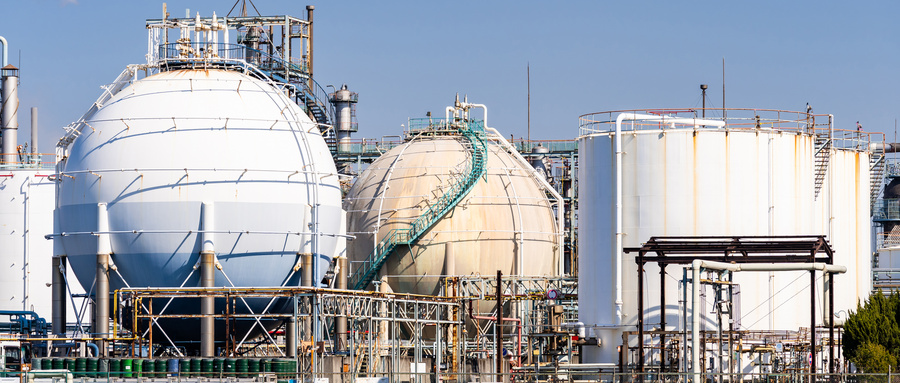
(Distillation Towers and Storage Tanks)
(3) Catalyst carrier: In petrochemical production, the role of catalyst is crucial. The alloy can serve as a carrier for the catalyst, providing a stable surface and appropriate pore size, which is beneficial to the dispersion of the catalyst and the loading of active components. At the same time, the alloy carrier also has good thermal conductivity and mechanical strength, which helps improve the efficiency and life of the catalyst.
(4) Deep-sea oil mining equipment: Deep-sea oil mining faces more harsh environmental conditions, such as low temperature, high pressure, seawater corrosion, etc. Special alloys such as titanium alloys are widely used in deep-sea oil extraction equipment due to their high strength, corrosion resistance and low density. For example, titanium alloys can be used to manufacture reactors, valves, pipes and other equipment, as well as structural parts of submersibles.
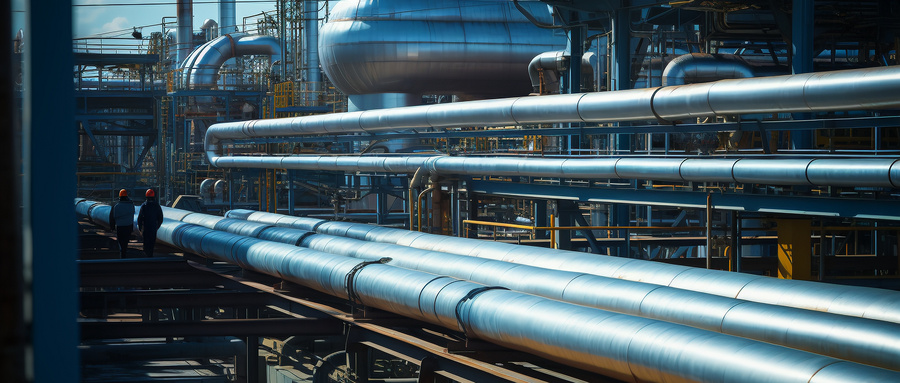
(Petrochemical Transportation Pipelina)
(5) Power transmission and heat exchange equipment: Aluminum alloy and other alloys are also widely used in power transmission and heat exchange equipment in the petrochemical industry. Aluminum alloy has good electrical and thermal conductivity and can be used to manufacture wires, cables, radiators and other components. These equipment play an important role in petrochemical production and ensure the smooth progress of production.
II. Detailed explanation of material requirements
The material requirements for alloys in the petrochemical industry are very strict, because the working environment in the petrochemical industry often involves a variety of harsh conditions such as high temperature, high pressure, highly corrosive media, and mechanical stress.
(1) Corrosion resistance: In the petrochemical production process, acid, alkali, salt and other corrosive media are often encountered. The alloy must have excellent corrosion resistance to resist the attack of these chemicals and ensure long-term stable operation of the equipment.
(2) High-temperature strength: In the petrochemical process, many equipment and pipelines need to work at high temperatures, so alloy materials must have sufficient high-temperature strength to maintain their structural integrity and mechanical properties.
(3) Oxidation resistance: In high-temperature environments, alloy materials easily react with oxygen, leading to oxidation and corrosion. Therefore, the alloy needs to have good oxidation resistance to extend the service life of the equipment.
(4) Wear resistance: Many components in petrochemical equipment, such as valves, pumps and bearings, will be subject to wear during operation. Alloy materials need to have high hardness and wear resistance to reduce wear and maintenance costs.
Good processing properties: Petrochemical equipment often requires precise manufacturing and processing, and alloy materials need to have good casting, forging, welding and machining properties to facilitate manufacturing and repair.
III. Refinement of process requirements
(1) Welding process: The petrochemical industry has very high requirements for welding quality. During the welding process of alloy steel, process selection and control are the keys to ensuring welding quality. The latest specification requirements must be followed, including detailed requirements in many aspects such as welding current, welding speed, welding temperature, welding flow rate, etc., to strictly ensure the quality of welding execution. In addition, corresponding preventive and resolving measures need to be taken for technical difficulties such as residual stress and thermal cracks that may occur during the welding process.
(2) Material selection and processing: In the selection of alloy materials, the selection must be strictly based on the type, grade, size, quality and other requirements of the material to ensure the reliability of material quality. For materials that require special treatment, such as titanium alloys and aluminum alloys, their high strength, corrosion resistance, low density and other properties also need to be considered to meet the specific needs of petrochemical equipment.
(3) Prefabrication and processing: During the prefabrication and processing of alloy materials, the quality of each link needs to be strictly controlled. For example, when assembling pipe mouths, construction requirements should be followed to ensure assembly quality. For welding personnel, strict requirements are also needed to improve the welding qualification rate, thereby effectively improving the welding quality.
(4) Quality inspection and control: The application of alloy materials in petrochemical equipment requires strict quality inspection and control. This includes quality inspection of welds and reliability inspection of welded joints, as well as pressure and leakage testing of the entire equipment or system. Testing methods and standards should follow the latest regulatory requirements to ensure the safety and reliability of the equipment.
(5)Protection measures: During the construction process, it is also necessary to consider the impact of adverse weather and other factors on the welding quality. Therefore, certain protective measures need to be implemented, such as using windproof and rainproof facilities, and ensuring the temperature and humidity of the construction environment.
IV. Recommended alloy grades
(1) Hastelloy C-276: This is a corrosion-resistant alloy containing nickel, chromium, molybdenum, tungsten and other elements. It is very suitable for chemical and petroleum industry equipment in highly corrosive media. Hastelloy C-276 alloy has extremely high corrosion resistance and heat resistance and is widely used to handle various corrosive chemicals.
(2) Inconel 600: This is one of the earliest developed Inconel alloys and has good corrosion resistance and high temperature strength. It is often used to manufacture high-temperature equipment such as chemical pressure vessels and furnace tubes, and can resist corrosion from high temperatures and corrosive environments.
(3) Inconel 625: This is a very popular grade with excellent corrosion resistance and high temperature performance, and is easy to process and weld. Inconel 625 is widely used in high-end industries such as aerospace and aerospace, and is also used in the petrochemical industry to manufacture high-temperature and high-pressure equipment such as catalysts, reactors, pipelines, valves, and pumps.
(4) GH3030: This is an iron-based nickel-based heat-resistant alloy with good corrosion resistance and heat resistance, and can remain stable in high temperatures and corrosive environments. It is commonly used in the manufacture of equipment and components that require high temperature and high pressure.
GH4145 and GH4169: These are cobalt- and nickel-based high-temperature alloys with excellent heat and corrosion resistance. They are widely used in aerospace engines, gas turbines and other fields, and also have certain applications in the petrochemical industry.