
Aerospace
I. Application Overview
(1) High-temperature alloys: This type of alloy can still maintain high strength and good anti-oxidation and anti-corrosion properties at high temperatures of 600~1200°C. Therefore, high-temperature alloys are widely used in high-temperature components such as engine combustion chambers, turbine blades, guide vanes, compressor blades and disks, combustion chamber rear barrels, casings, rings, tail nozzles, etc. of aerospace aircraft. They can remain stable in extreme working environments and ensure efficient and safe engine operation.
(2) Nickel-based alloy: This type of alloy uses nickel as the main component and has good high temperature resistance, corrosion resistance and creep resistance. In the field of aerospace, nickel-based alloys are mainly used to manufacture high-temperature components, such as engine combustion chambers, turbine blades and guide vanes. They remain stable in high temperatures and corrosive environments, ensuring reliable engine operation.
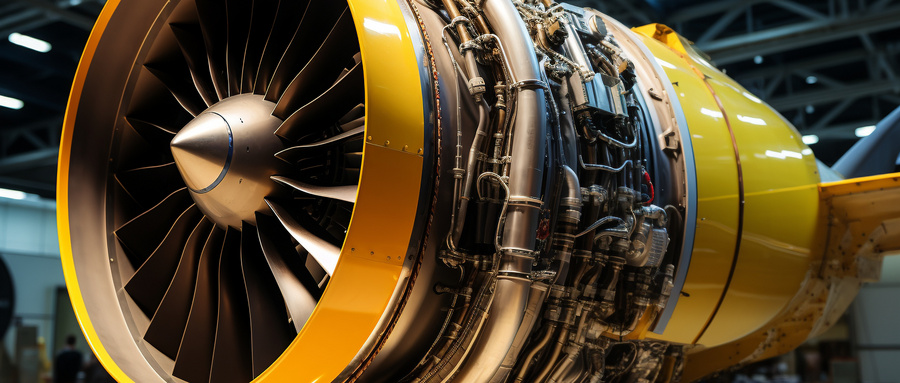
(Spacecraft Engine)
II. Detailed explanation of material requirements
Material requirements for high temperature alloys:
1. High-temperature strength: High-temperature alloys need to maintain sufficient strength and stiffness in high-temperature environments to withstand various loads and stresses generated by aerospace vehicles during flight or work.
2. Oxidation resistance: Since aerospace vehicles will face high-temperature oxidation problems when flying at high speeds, high-temperature alloys need to have good oxidation resistance to protect the materials from oxidation.
3. Creep resistance: High-temperature alloys need to have excellent creep resistance, that is, under the action of high temperatures for a long time, the shape and size of the material can remain stable without significant deformation.
4. Good processing properties: High-temperature alloys need to have good processing properties to facilitate the manufacture of aerospace components of various complex shapes.
Material requirements for nickel-based alloys:
1. High-temperature strength and toughness: Nickel-based alloys need to maintain high strength and good toughness at high temperatures to ensure stable operation in high-temperature, high-pressure and high-flow working environments.
2. Excellent corrosion resistance: Aerospace vehicles may encounter corrosive media during flight, such as fuel, lubricating oil, etc., so nickel-based alloys need to have excellent corrosion resistance.
3. Good welding properties: Nickel-based alloys need to have good welding properties to facilitate connection and repair during the manufacturing process.
4. Good thermal stability: Nickel-based alloys need to have good thermal stability, that is, they can maintain the structure and performance of the material stable at high temperatures without significant changes.

(Aircraft/Rocket Tail Nozzle )
III. The process requires refinement
(1) Process requirements for high-temperature alloys:
1. Smelting and casting: The smelting of high-temperature alloys requires the use of high-purity raw materials and is carried out under vacuum or inert gas protection to prevent oxidation and contamination of alloy elements. During the casting process, the solidification rate and temperature gradient need to be controlled to obtain fine grains and a uniform structure.
2. Thermal processing and plastic forming: During the thermal processing of high-temperature alloys, the heating temperature, deformation amount and deformation rate need to be controlled to avoid defects such as cracking and uneven deformation. Plastic forming processes such as forging, rolling, etc. also require strict control of process parameters to obtain the required shape and size.
3. Heat treatment: Heat treatment of high-temperature alloys includes solid solution treatment, aging treatment, etc., aiming to adjust the structure and properties of the material. Solid solution treatment can eliminate segregation and precipitation phases in the alloy and improve the strength and toughness of the material. Aging treatment further improves the durable strength and creep properties of the material by controlling the morphology and distribution of the precipitated phases.
(2) Process requirements for nickel-based alloys:
1. Smelting and casting: Similar to high-temperature alloys, the smelting of nickel-based alloys also needs to be carried out under vacuum or inert gas protection to ensure the purity of the alloy. During the casting process, it is also necessary to control the solidification rate and temperature gradient to obtain a good as-cast structure.
2. Hot working and cold working: Nickel-based alloys have good hot working properties and can be used for hot working operations such as forging and rolling. During the processing, the heating temperature, deformation amount and deformation rate need to be controlled to avoid defects such as cracks and cracks in the material. In addition, nickel-based alloys can also be subjected to cold working operations, such as cold rolling, cold drawing, etc., but attention needs to be paid to controlling work hardening and the generation of residual stress.
3. Welding and connection: Nickel-based alloys have good welding properties and can be connected using a variety of welding methods. During the welding process, parameters such as welding temperature, welding speed and welding atmosphere need to be controlled to ensure the quality and performance of the weld. At the same time, in order to avoid problems such as hot cracks and residual stress during the welding process, appropriate preheating and post-heat treatment measures can be taken.
4. Heat treatment and surface treatment: Heat treatment of nickel-based alloys includes solid solution treatment, aging treatment, etc., aiming to adjust the structure and properties of the material. In addition, in order to improve the corrosion resistance and wear resistance of the material, surface treatment operations such as spraying, electroplating, etc. can also be performed on the nickel-based alloy.
IV. Recommended alloy grades
GH3030, GH3039, etc. These high-temperature alloys have good high-temperature strength, oxidation resistance and corrosion resistance, and are widely used in aerospace engines, gas turbines and other high-temperature components.
Inconel series (such as Inconel 600, Inconel 625, Inconel 718, etc.)
Hastelloy series (C-276, C-22, B/B-2, B-3)
Hastelloy B series alloy: For example, Hastelloy B-2 alloy is a nickel-molybdenum alloy with excellent corrosion resistance to reducing environments such as sulfuric acid and phosphoric acid. It is often used in fuel systems and liquid oxygen systems of aerospace vehicles. and other parts.
Hastelloy C series alloys: Hastelloy C-276 alloy, for example, is a nickel-chromium-molybdenum alloy with excellent resistance to oxidation and reducing media corrosion. It is widely used in high-temperature corrosive environments such as engine parts, combustion chambers, and exhaust pipes of aerospace vehicles.