
Automobile making
I. Application Overview
(1) Engine exhaust system:
Nickel-based alloys are mainly used in automotive manufacturing for components in high-temperature and corrosive environments due to their excellent high-temperature strength, creep resistance and good corrosion resistance. For example, the exhaust system components of automobile engines (such as turbochargers, exhaust manifolds) and catalytic converter casings need to withstand extremely high temperatures and the erosion of corrosive gases.
(2) High temperature components:
High-temperature alloys are mainly used for high-temperature components in automobile engines, such as turbine blades, combustion chambers, pistons, etc. These components are required to withstand extremely high temperatures and pressures during operation, requiring materials with excellent high-temperature strength and creep resistance. High-temperature alloys can meet these requirements and ensure stable operation of engines at high temperatures.
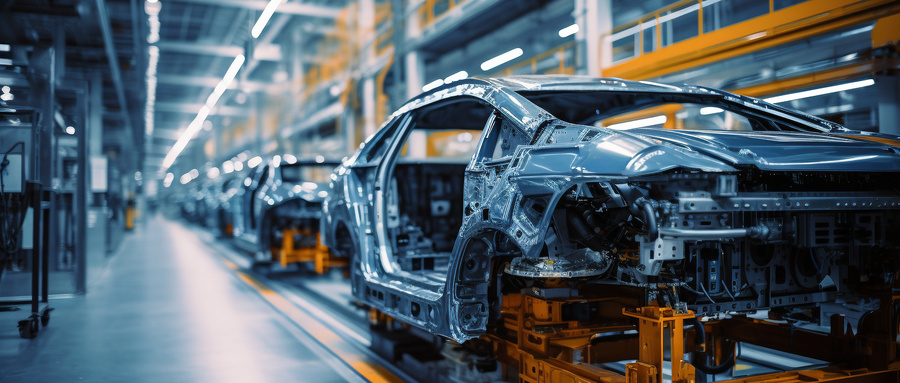
(High-strength Automobile Body Structure)
(3) Exhaust system, fuel system, cooling system and body structure:
Stainless steel is widely used in automobile manufacturing due to its good corrosion resistance and aesthetics. It is mainly used in automobile exhaust systems, fuel systems, cooling systems and body structures. The stainless steel exhaust system can resist corrosive substances in the exhaust gas and extend its service life; the stainless steel fuel system and cooling system can ensure the cleanliness of fuel and coolant and prevent corrosion and leakage. In addition, stainless steel is also used to manufacture automobile exterior parts and fasteners.
(4) Sensors, actuators, and electronic control units:
Precision alloys are mainly used in automotive manufacturing to create high-precision and high-reliability components. For example, automobile sensors, actuators, electronic control units and other components require precision alloys to ensure their precise working performance and stability. In addition, precision alloys are also used to manufacture transmission components such as bearings and gears for automobiles, as well as key components such as shock absorbers and suspension systems. These components require extremely high material performance, and precision alloys can meet these requirements and ensure the safe and stable operation of the car.
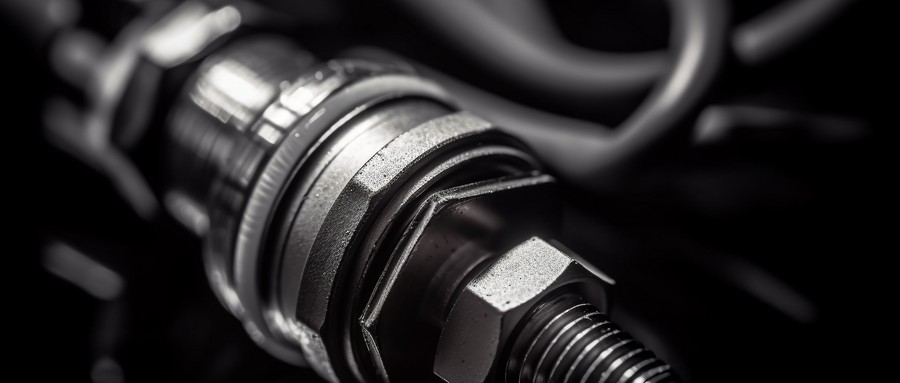
(High-precision Automotive Sensors)
II. Detailed explanation of material requirements
(1) Strength and toughness: The alloy needs to have sufficient strength and toughness to withstand the various stresses and impacts generated by the car during operation. This requires the alloy to be optimized in terms of composition design and heat treatment to achieve a good match of strength and toughness.
(2) Corrosion resistance: During use, cars will be exposed to various corrosive substances, such as salt spray, acid rain, etc. Therefore, the alloy needs to have good corrosion resistance to ensure the long-term service life and safety of the car.
(3) Thermal stability and fatigue resistance: The alloy needs to maintain stable performance under high temperature and long-term load, and have fatigue resistance to prevent deformation, cracking and other failures during use of the car.
III. Refinement of process requirements
(1) Casting process: Casting is a commonly used process in automobile manufacturing, especially for large and complex-shaped components. The alloy needs to have good flow properties so that it can completely fill the mold during the casting process. In addition, the shrinkage and solidification behavior of the alloy also need to be controlled to prevent the occurrence of casting defects.
(2) Forging and rolling processes: These processes are used to produce components with specific shapes and mechanical properties. The alloy needs to have good plasticity so that it can be easily deformed during forging and rolling without cracking. At the same time, the re-crystallization behavior and heat treatment response of the alloy also need to be controlled to achieve the desired micro-structure and mechanical properties.
(3) Welding process: Welding is the main method of connecting multiple components together. The alloy needs to have good weld-ability to ensure the strength and integrity of the welded joint. In addition, the heat-affected zone that may be created during the welding process also needs to be controlled to prevent adverse effects on component performance.
(4) Mechanical processing technology: Mechanical processing is used to manufacture parts with precise sizes and shapes. The alloy needs to have good mach-inability so that a smooth and accurate surface can be obtained during machining. At the same time, the hardness and toughness of the alloy need to be balanced to prevent excessive wear of the tool and premature component failure.
(5) Heat treatment process: Heat treatment is used to adjust the micro-structure and mechanical properties of the alloy. Alloys need to have good heat treatment response to achieve the required hardness, strength and toughness. In addition, possible deformation and cracking during heat treatment also need to be controlled.
(6)Surface treatment process: Surface treatment is used to improve the corrosion resistance, wear resistance and aesthetics of components. Alloys need to be compatible with a variety of coatings and platings to ensure the effectiveness and durability of the surface treatment.
IV. Recommended alloy grades
1. Nickel Based Alloy
Ø Inconel series: such as Inconel 600, Inconel 625, Inconel 718, etc. These alloys are commonly used in turbochargers, exhaust systems and high-temperature components in automotive engines because of their high-temperature strength and corrosion resistance.
Ø Hastelloy series: such as Hastelloy C-276, etc., which are used in special parts of automobiles because of their excellent corrosion resistance.
2. High temperature alloys
Ø Nimonic series: such as Nimonic 80A, Nimonic 90, etc., commonly used in turbine blades and combustion chamber components of automobile engines.
Ø Waspaloy: A commonly used high-temperature alloy used in combustion chambers and hot-end components of engines.
3. Stainless steel
Ø 300 series: such as 304, 316, etc., have good corrosion resistance and process-ability, and are often used in automobile exhaust systems, body structures and fasteners.
4. Precision alloy
Ø Elgiloy: A cobalt-based alloy commonly used in automotive springs and sensitive components due to its excellent elasticity and corrosion resistance.
Permendur: A cobalt-iron alloy with high magnetic permeability and low coercivity, used in electronic and magnetic components in automobiles.