
Medical Equipment
I. Application overview
(1) Surgical instruments and medical equipment
Precision alloys are commonly used in the manufacture of surgical instruments and medical equipment, such as scalpels, forceps, and suture needles. These alloys have high hardness and wear resistance, ensuring the sharpness and longevity of instruments. At the same time, its excellent corrosion resistance and bio-compatibility ensure the safety and stability of the equipment in use.
(2) Brackets and fixtures
3J21 alloy is a Co-Cr-Ni-Mo series high elastic alloy with excellent shape memory effect, super elastic effect and fatigue resistance. Its high hardness, strength, elastic limit and wear resistance, as well as excellent corrosion resistance, give it unique advantages in the manufacture of brackets and fixtures.

(Emergency Surgical Equipment)
(3) Stainless steel surgical instruments
Stainless steel is the main material for surgical instruments, such as scalpels, scissors, and forceps. These instruments need to withstand high temperatures, pressures, and corrosive environments, and stainless steel’s high strength and corrosion resistance make it the best choice.
(4) Medical equipment shell
Stainless steel is also commonly used in the manufacture of medical equipment casings, such as X-ray machines, CT machines, and MRIs. The enclosures for these devices need to withstand the challenges of a variety of physical and chemical environments, and stainless steel's strength and corrosion resistance make it an ideal material.
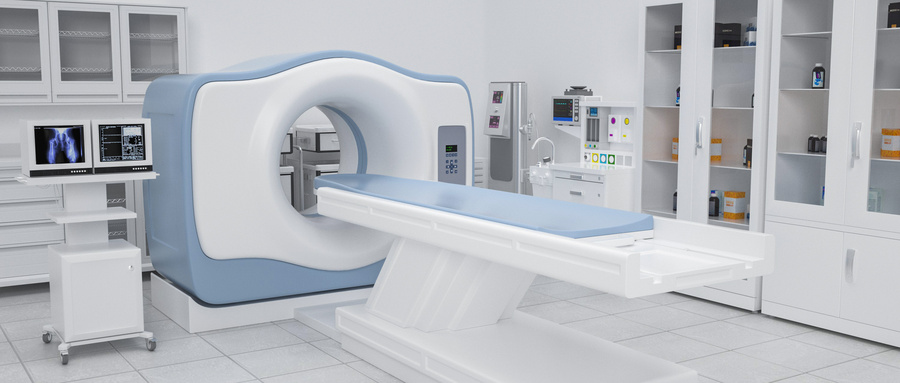
(CT Machine)
(5) Other applications
Stainless steel is also widely used in the manufacture of other medical equipment, such as needles, syringes and other disposable equipment, as well as hospital beds, wheelchairs and other equipment.
II. Detailed explanation of material requirements
(1) Wear resistance and fatigue resistance: For some medical devices that need to withstand long-term mechanical stress, such as artificial teeth, orthopedic implants, etc., the wear resistance and fatigue resistance of alloy materials are also very important. These properties directly affect the service life and safety of medical devices.
(2) Stability: Alloy materials should remain stable during long-term use and should not produce harmful substances or undergo performance degradation. This is critical to ensuring the long-term safety and effectiveness of medical devices.
(3) Magnetism: For some medical devices that need to work in a magnetic field environment, such as magnetic resonance imaging equipment, the magnetism of alloy materials is also a factor that needs to be considered. Some alloy materials with low magnetic properties, such as titanium alloys, Austenitic stainless steel, etc., are often used in the manufacture of such equipment.
III. Refinement of process requirements
(1) Casting process: For medical device components that need to be formed by casting, the control of the casting process is crucial. It is necessary to choose an appropriate casting method (such as sand casting, metal mold casting, investment casting, etc.) to ensure that the alloy can fully flow and fill the mold during the casting process, while avoiding defects such as pores and shrinkage cavities.
(2) Heat treatment and processing: The heat treatment process has an important impact on the properties of the alloy. By controlling parameters such as heating temperature, holding time, and cooling rate, the required tissue structure and mechanical properties can be obtained. In addition, the cutting parameters and lubricant selection during processing will also affect the surface quality and accuracy of the alloy.
(3) Welding and connection: For medical device components that require welding or connection, the selection and control of the welding process is also key. It is necessary to ensure that the strength, sealing and corrosion resistance of the welded joint meet the requirements, while avoiding the heat-affected zone generated during the welding process from adversely affecting the material properties.
(4) Surface treatment: The surface quality of medical device components is crucial to its performance and safety. Therefore, appropriate surface treatment methods (such as electroplating, spraying, oxidation, etc.) need to be used to improve the corrosion resistance, wear resistance and bio-compatibility of the alloy. At the same time, attention must also be paid to the uniformity, adhesion and durability of the coating.
IV. Recommended alloy grades
(1) Stainless steel 316L and 304 are one of the most commonly used metal materials for medical devices and have good bio-compatibility, corrosion resistance and mechanical properties.
(2) Nickel alloys have good corrosion resistance and mechanical properties, such as Hastelloy C-276, Inconel 625, etc.
(3) Elastic alloys such as 3J21 have high hardness, strength, elastic limit, fatigue strength, good wear resistance, earthquake resistance and impact resistance, and excellent corrosion resistance, and can be used as brackets and fixtures.